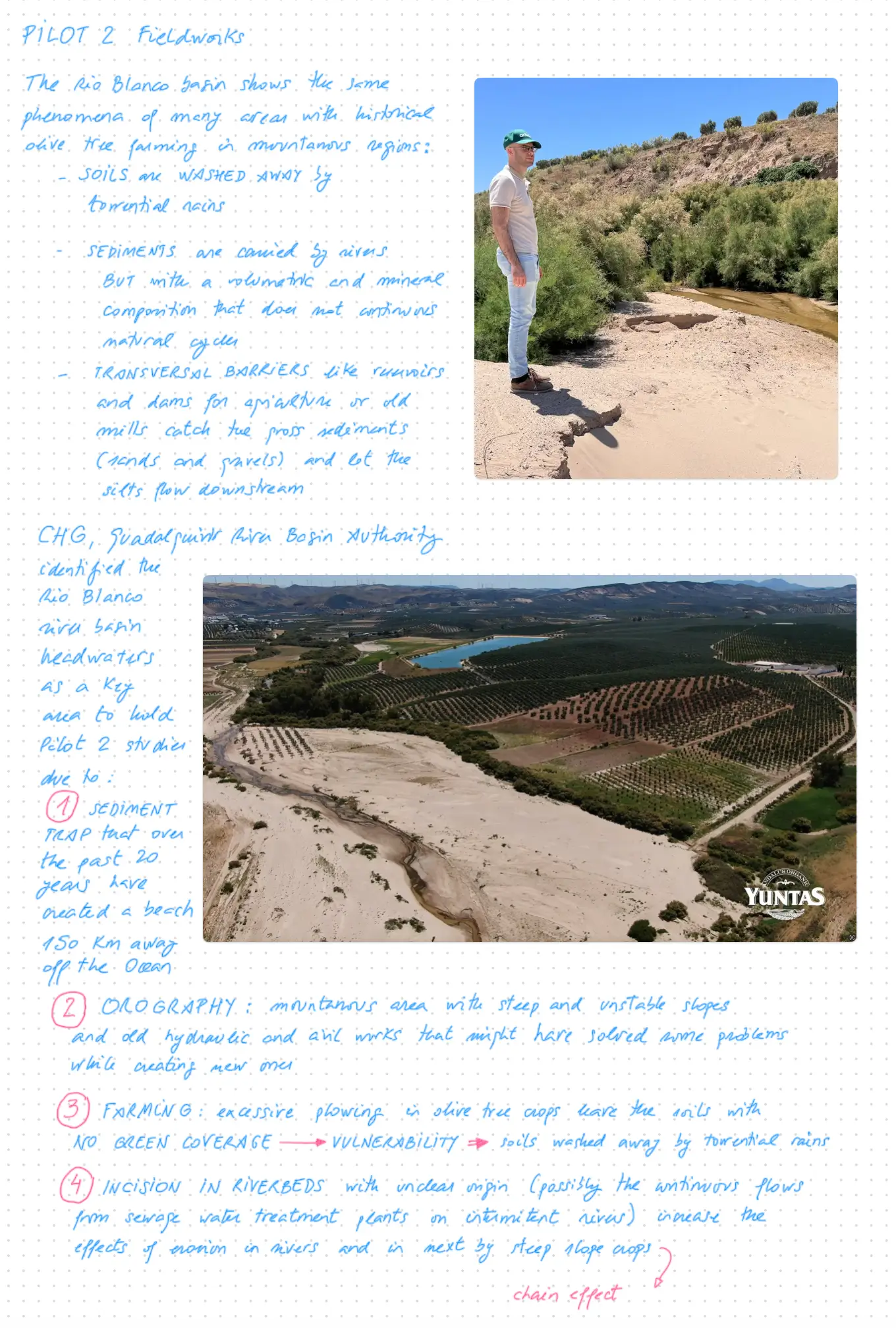
Torrential rains wash fertile soil into the Blanco River, causing it to overflow and sweep away olive saplings in the DPH (Digital Public Water Domain) ©Yuntas

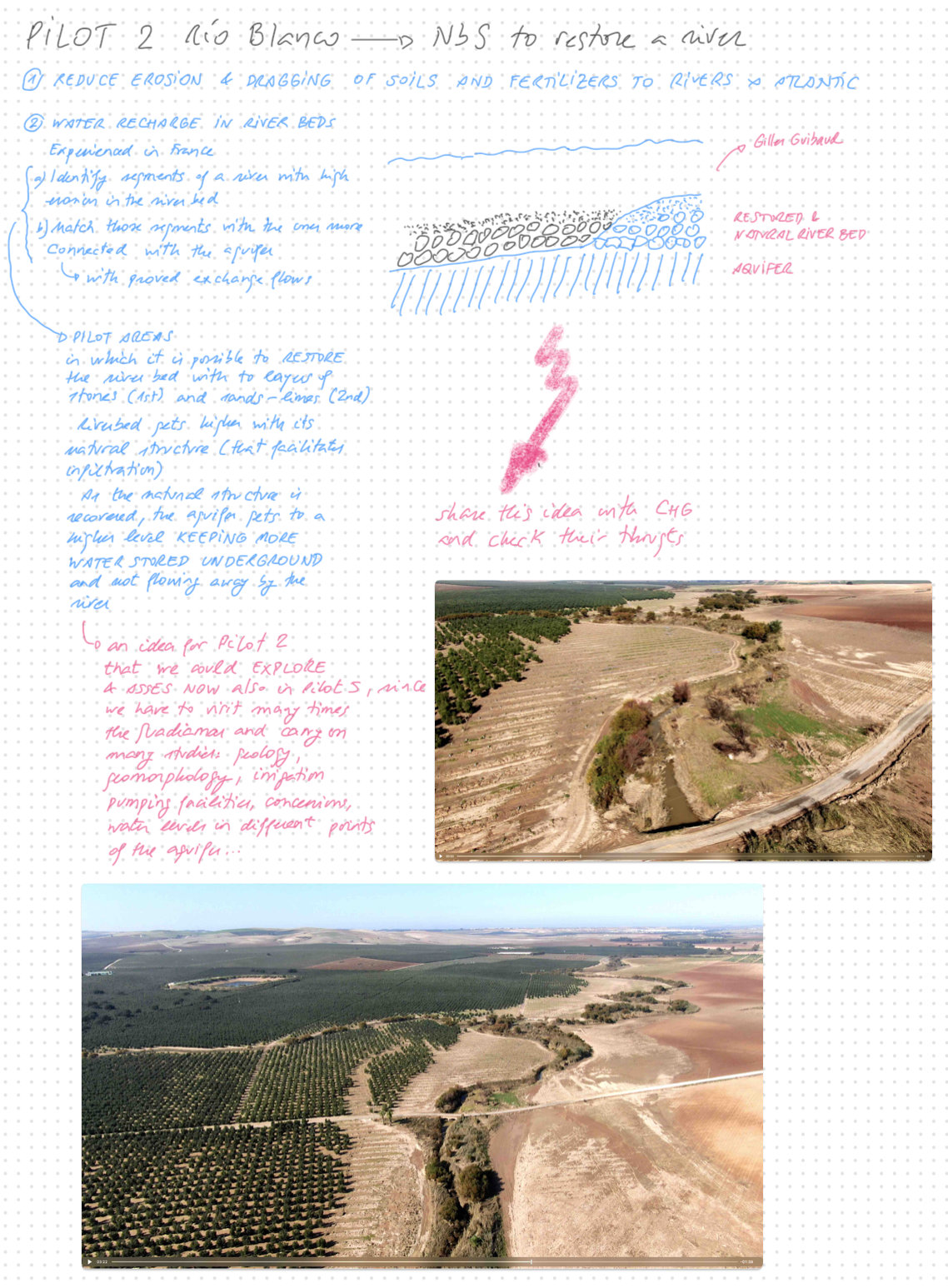
Pilot 2Rio Blanco (White River) restoration applying Nature based Solutions

Torrential rains wash fertile soil into the Blanco River, causing it to overflow and sweep away olive saplings in the DPH (Digital Public Water Domain) ©Yuntas

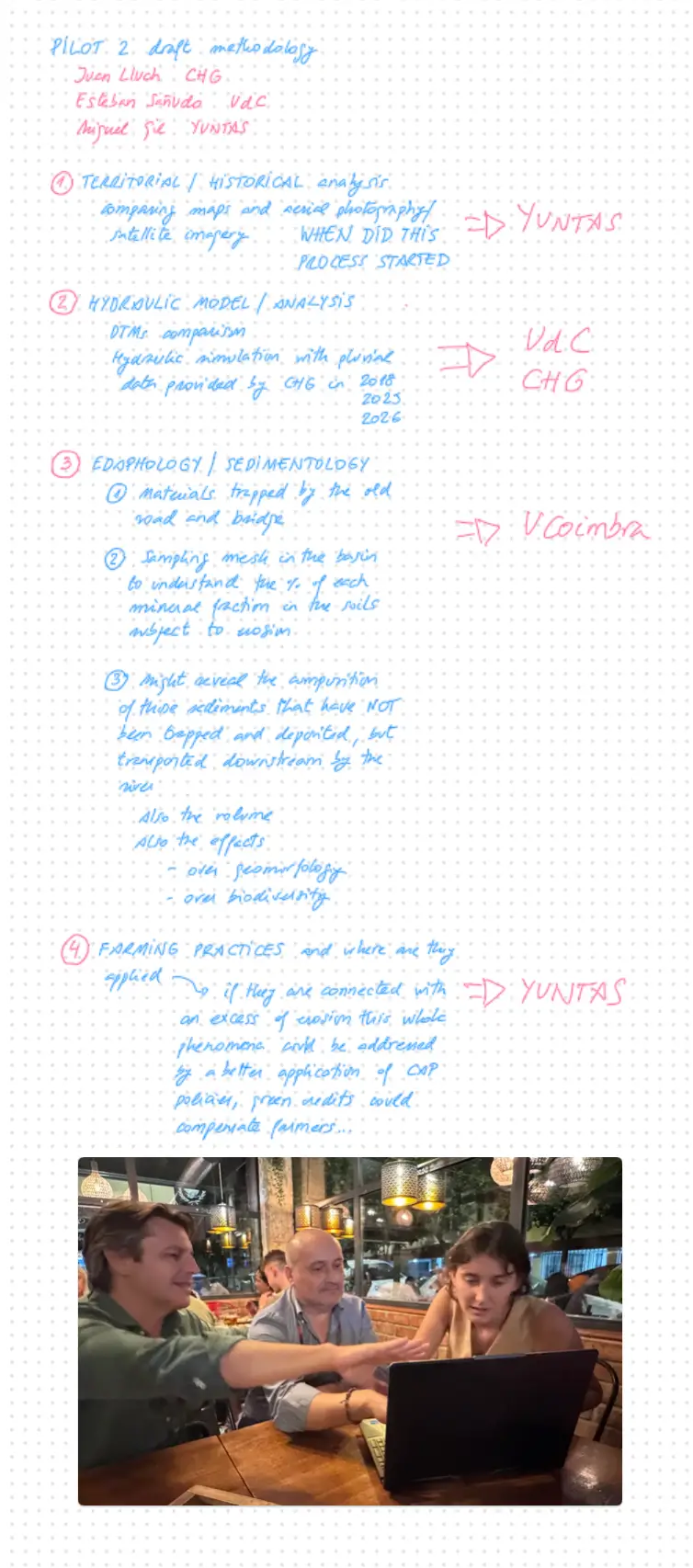
Pilot Project 2 draws on technical and governance studies and, through field trials, will develop Strategies, Manuals, and Action Guides with multiple purposes:

  1. Improve agricultural practices and, indirectly, the profitability of farms by reducing fertilizer use and tillage, and preventing the loss of the topsoil, the farmer’s main asset.
  2. Mitigate environmental risks by reducing the runoff of sediments and chemicals into the sea.
  3. Restore the health, functionality, and morphology of rivers.

The erosion that occurs at the headwaters of rivers produces gravel and sand that are trapped in reservoirs. Because this sediment no longer flows freely, the riverbanks and riverbed in the middle reaches of agricultural fields become distorted, altering the river ecosystem. This ecosystem is impoverished, and the water that the river carries to the sea does not provide the sand needed to replenish beaches, nor does it have the desired quality. Therefore, it is necessary to restore the rivers.

Pilot Project 2 will promote the creation of green infrastructure in rivers within the Pilot Areas, designing Nature-based Solutions for river restoration that will allow these rivers to function once again as ecological connectors and, by restoring their ecosystems, reduce the pollutants that reach the oceans.
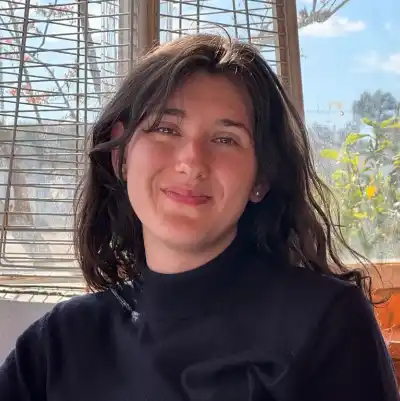
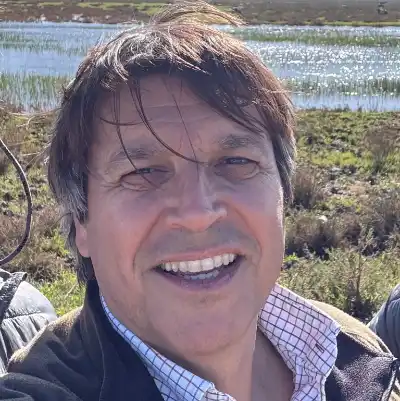
Ania Fernández

Ania Fernández

Civil Engineer

Pre-doctoral researcher, University of Coruña. Hydraulic model of surface water flows in the Doñana Natural Area and of combined flooding caused by Atlantic tides in the Guadalquivir Estuary.

Logo Universidade da Coruña
Carmen Jaén

Carmen Jaén

Geographer and Philologist

Governance and Communication responsible

  • Strategy for capturing, editing, and managing content

Responsible for aligning proposals with European regulations and for the collaborative design of environmental and water planning and management strategies

Logo Yuntas
Esteban Sañudo

Esteban Sañudo

Research leader

PhD in Civil Engineering, University of Corunna

Lead scientist for the two-dimensional hydraulic models used to study erosion and sediment transport (Río Blanco), for the renaturalization and recovery of water resources in Doñana, and for surface water flows within the Doñana Natural Area.
Lead scientist in the analisis of erosive and hydraulic dynamics and sediments transport in Rio Blanco headwaters

Logo Universidade da Coruña
Gilles Guibaud

Gilles Guibaud

Chemist and researcher at the University of Limoges, E2Lim laboratory

Responsible for:

  • design of monitoring of pollutants of agricultural and mining origin

proposals for neutralizing, reducing or removing pollution in rivers and wetlands

Logo Université de Limoges

Juan Lluch

Representative of the Guadalquivir River Basin Authority (CHG)

Civil Engineer, Deputy Commissioner in charge Rivers’ management

Logo Confederación Hidrográfica del Guadalquivir
Marina de Miguel

Marina de Miguel

Agricultural Engineer, Master in Hydraulics

Pre-doctoral researcher, University of Coruña.

Hydraulic model of the exchange of surface waters between the Guadiamar River and the Doñana Natural Area, and the interaction with the water contributions of the La Rocina, El Partido, and Cañada Mayor streams.
Hydraulic models of erosion and sediment transport in the Río Blanco, and analysis of erosion and sedimentary processes in the Odeleite and Beliche basins.

Logo Universidade da Coruña
Miguel Gil

Miguel Gil

Technical Coordinator

Geographer, in charge of:

  • Territorial and environmental analyses in Doñana, the Guadalquivir Estuary, the Río Blanco, and the Odeleite and Beliche basins
  • Drafting of Planning and Strategy proposals
  • Basic proposal for sediment management and hydraulic study of the rivers that provide the main water supply to Doñana

Logo Yuntas